Your attic's open condensate collection bowl catches water from incoming equipment lines - and sometimes collects algae and sludge. Violet shows the water path through the P-trap and downstream vent/drain tee, plus your wet/dry vacuum and warm-water cleanup routine.
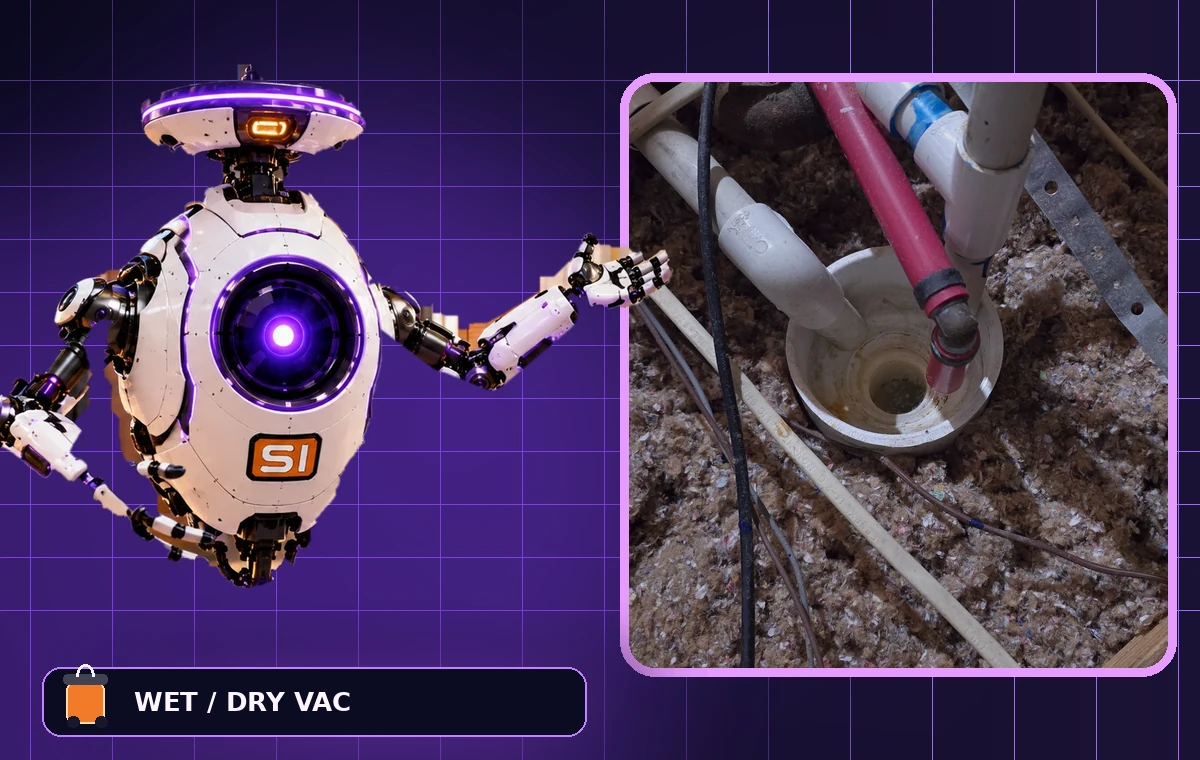
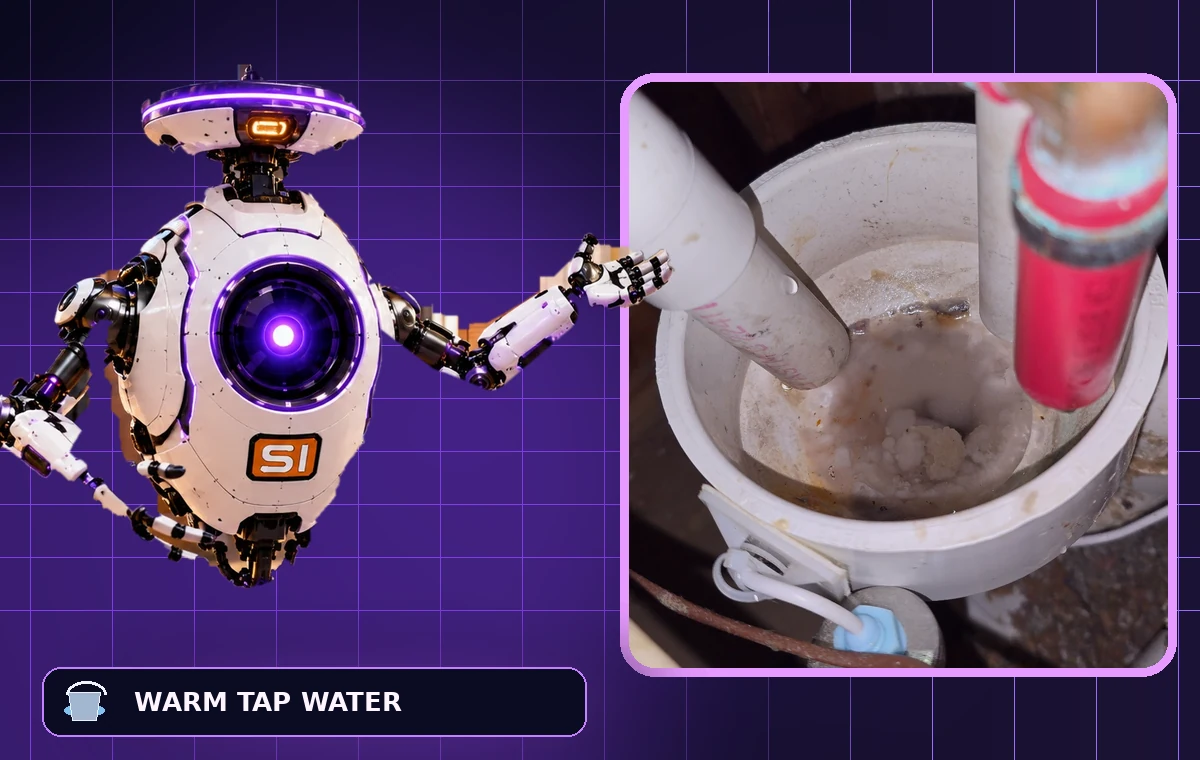
Violet identifies the open bowl before wet/dry vacuum cleaning.Violet checks the actual drain bowl before a gentle warm-water rinse.
01 / VIOLET'S LIVE FLOW LAB
What happens inside the open drain bowl?
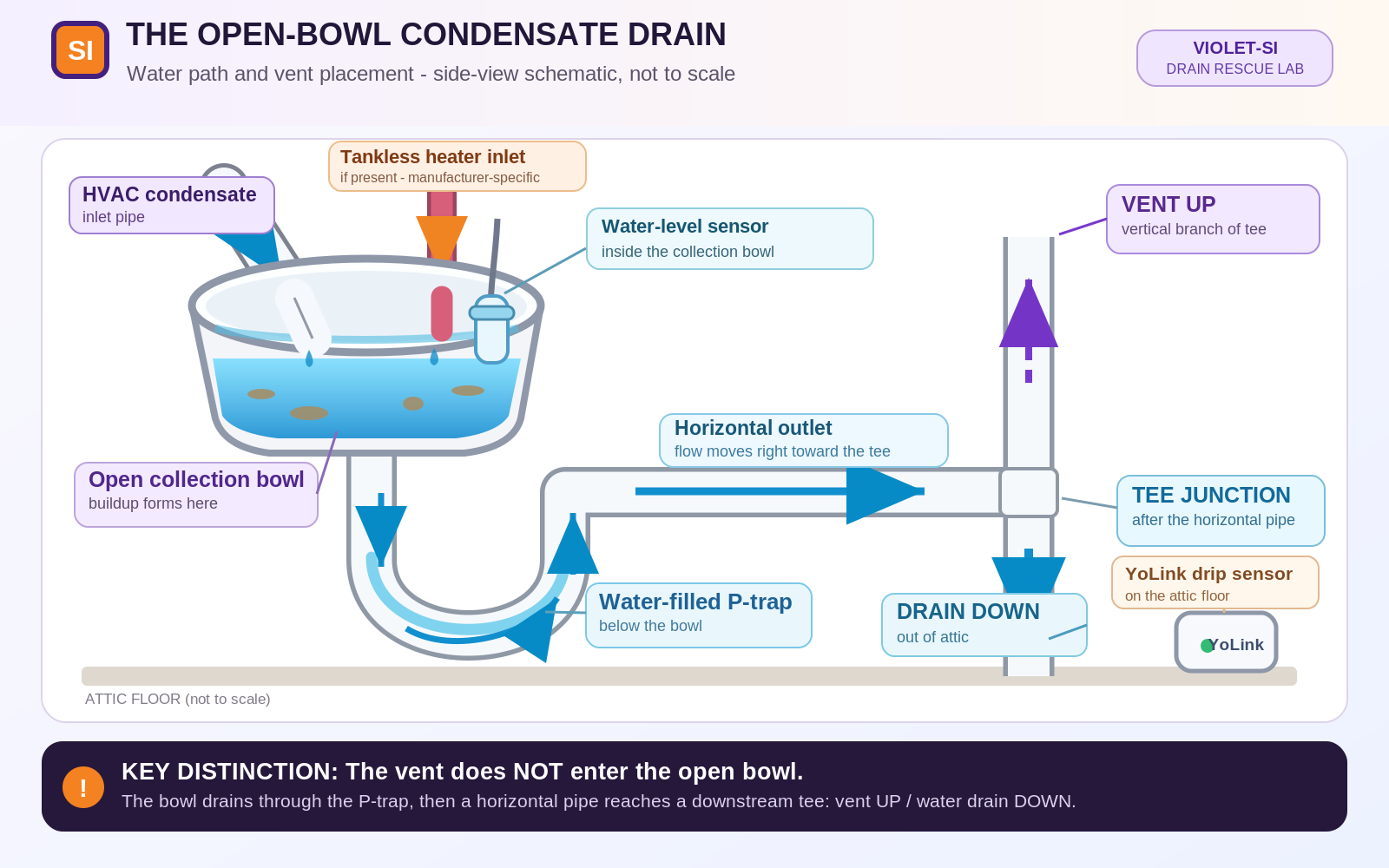
Explore what happens when the open bowl collects sludge. Condensate enters from above, drains through the bowl's bottom and P-trap, then travels horizontally to a downstream tee - vent UP and drain DOWN. This animated illustration is not a construction drawing; use the exact schematic below for pipe placement.
Choose a condition
Normal - water is moving
Condensate leaves the pan, passes through the water-filled trap and flows to its outlet.
The buttons simulate the outcome only. They do not control equipment or establish whether your home is safe to service.
Violet's open-bowl flow simulator
Vent tee is downstream - after the P-trap
Blue = water and drainage, brown = sludge buildup in the open bowl, orange = overflow risk. Your YoLink bowl water-level sensor and attic-floor drip sensor are additional safeguards; test the actual HVAC cutoff arrangement without bypassing safety controls.
02 / YOUR ACTUAL OPEN-BOWL ASSEMBLY
Here is where the vent really belongs.
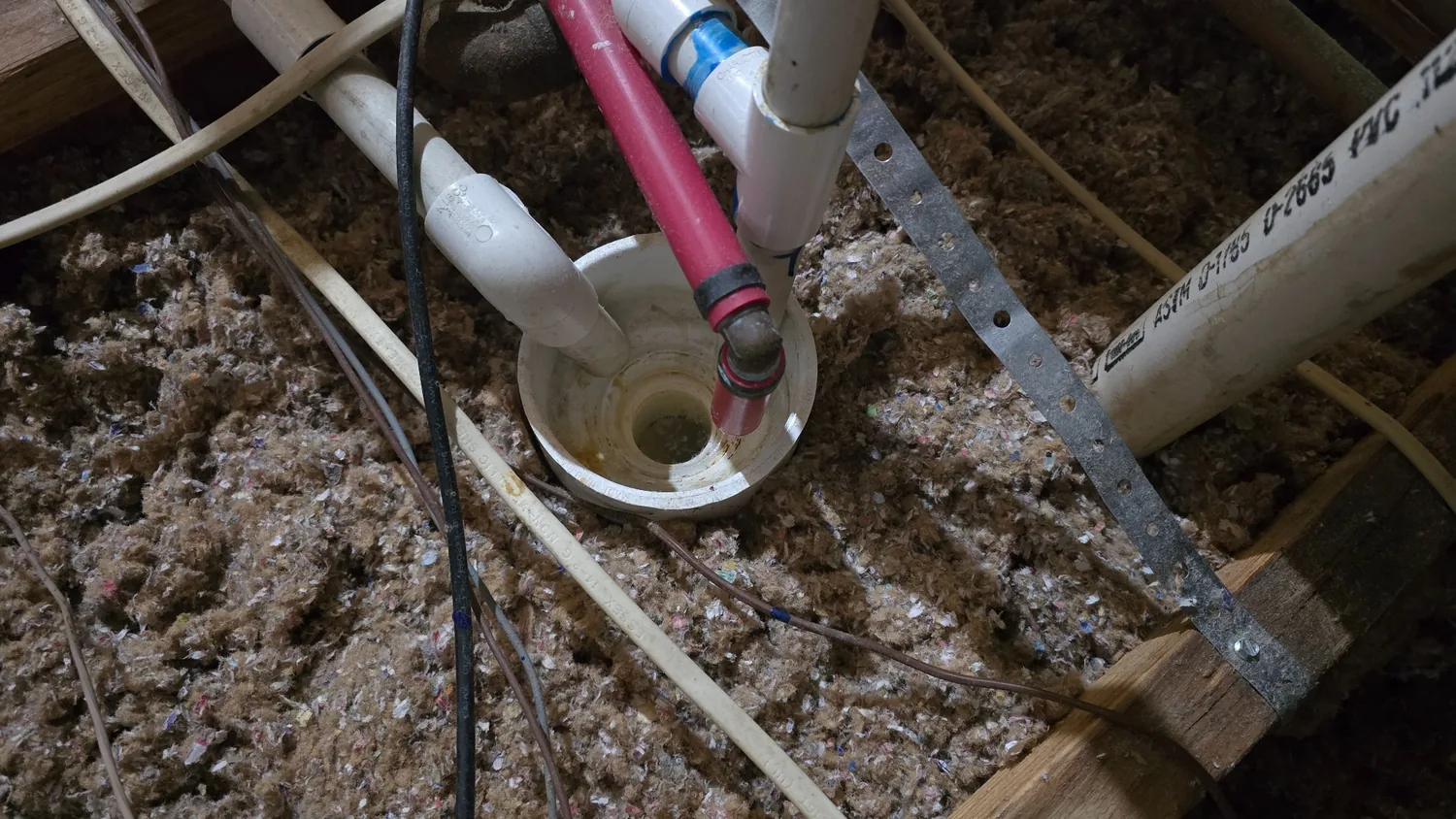
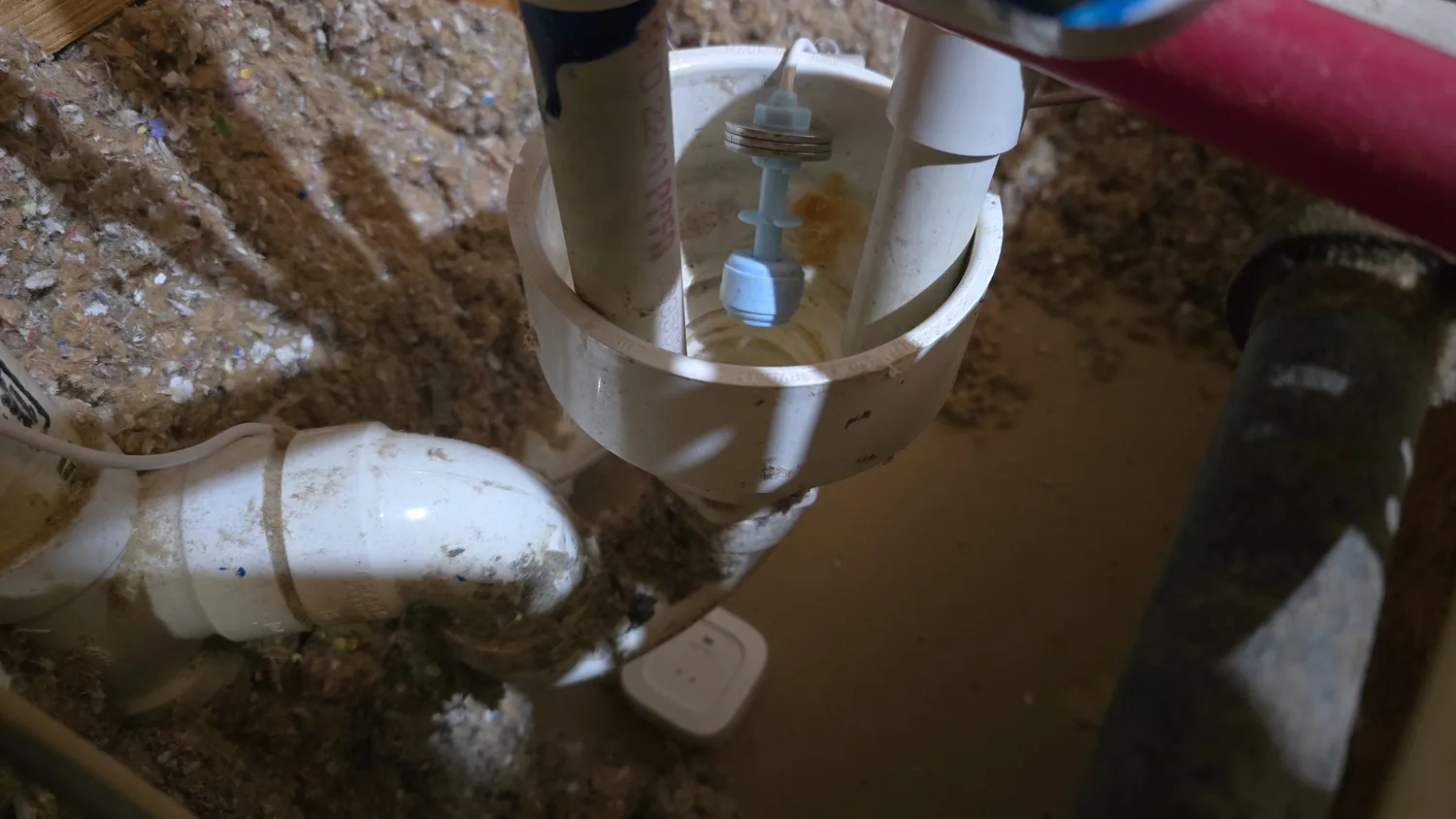
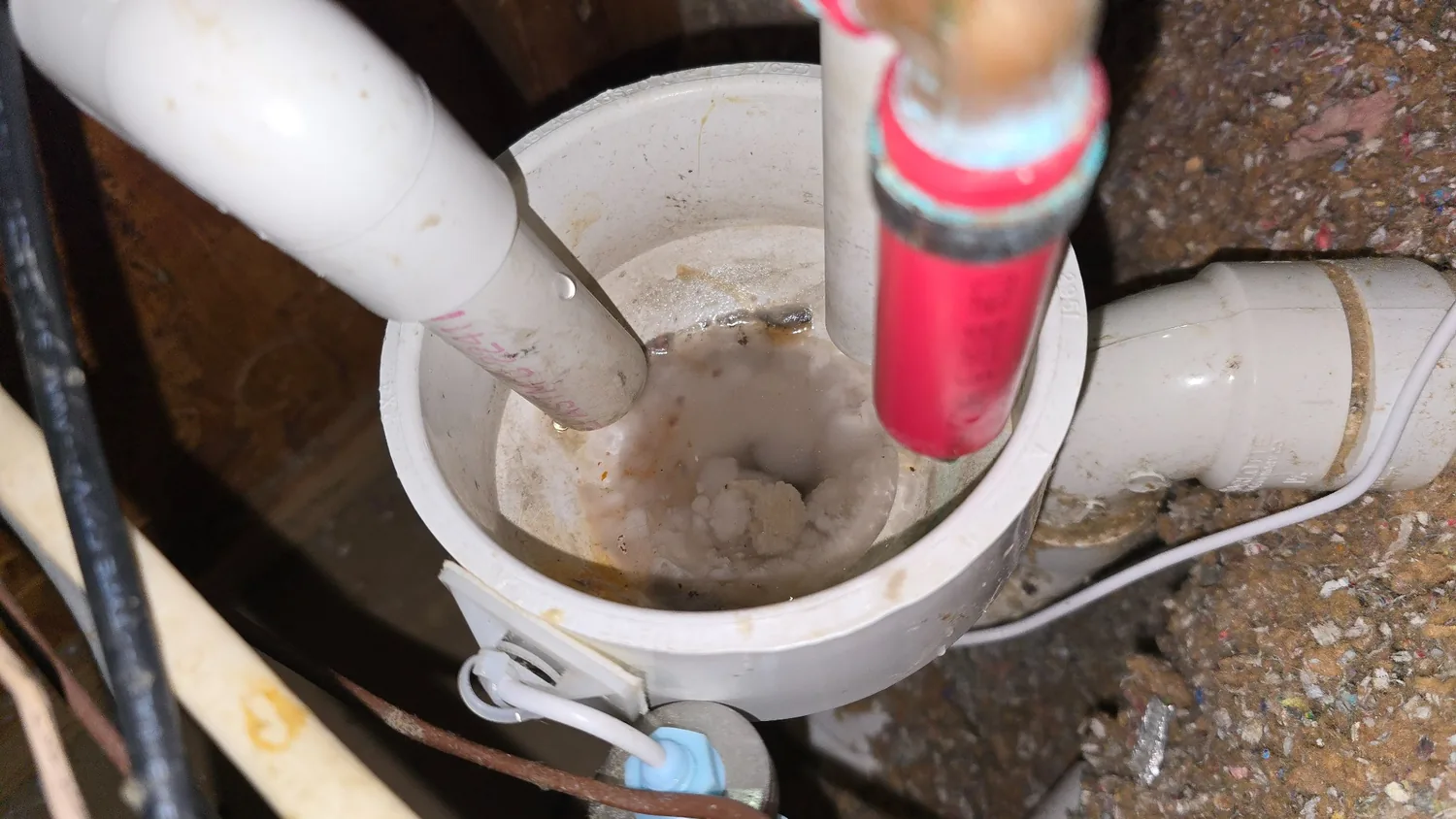
Your photographs show a wide open collection bowl receiving separate condensate lines. The bowl drains from its bottom into a P-trap. Water rises into a horizontal outlet, which then reaches a downstream tee - the vent goes straight UP from that tee and the drain goes straight DOWN. The vent does not enter the bowl. Do not use this conceptual sketch to modify existing code-regulated plumbing without a qualified installer.
This is the authoritative flow-path illustration for this HowTo - based on the author's actual attic arrangement, not a generic inline AC drain. For clarity the diagram is not to scale and does not establish code or venting requirements.
Violet's reminder: the bowl is the open-air collection point where slime, debris and fungal growth can accumulate. The drain's water seal is in the P-trap below; the vent is beyond the trap at the downstream tee.
Real attic reference photographs
These are photographs of the author's installation. Actual condensate tubing, sensor probe placement, PVC routing and cleaning access vary between properties.
The collection bowl: multiple discharge tubes and an open bottom drain opening.The protective sensors: bowl water-level probe and attic-area leak detection equipment.The problem area: residue in the open bowl around the drain throat and tubes.
03 / WATER-ONLY MAINTENANCE
Six steps - clean the open bowl without routine bleach.
This reflects the author's current routine: vacuum out the open-air bowl and its accessible throat, then rinse gently with plain warm water and verify the water can leave through the P-trap. Safety, manufacturer guidance and safe access always come first.
1
Identify and inspect the open collection bowl
Confirm which HVAC or appliance condensate tubes discharge into the open bowl. Check for biofilm, sludge, standing water, loose lines and the correct outlet. Do not confuse the downstream vent with an inlet.
2
Shut down and prepare safely
Turn off HVAC cooling and isolate equipment as the manuals require. Stay on a solid attic walkway, protect electrical parts, and keep water and tools away from wiring and insulation.
3
Remove accessible bowl buildup with a wet/dry vacuum
Use the manufacturer-approved wet-pickup setup. Gently remove standing water and sludge from the open bowl and accessible drain throat, avoiding the water-level probe, fittings and loose piping. Stop if anything is fragile or cannot be reached safely.
4
Rinse slowly with plain warm tap water
If approved for the connected equipment, add modest amounts of warm to moderately hot tap water (not boiling) into the bowl. Do not overflow the bowl or force water into an obstructed line.
5
Verify the P-trap and downstream tee
Confirm the bowl outlet leads down through the water-sealed P-trap, then into a horizontal pipe and a downstream tee: vent straight up, drain straight down. Restore the trap water seal as required by the equipment and verify the vent is unobstructed.
6
Verify drainage and YoLink safety shutoffs
Watch the bowl level fall normally. Confirm inlet tubes are supported, the attic-floor leak sensor is dry, and the bowl water-level cutoff and HVAC shutdown automation are tested by an approved method. Never bypass a safety switch.
What the wet/dry vacuum actually accomplishes
In your attic arrangement, the troublesome sludge is visibly accumulating in the open bowl where the condensate tubes empty. Properly configured wet/dry suction can lift out that accumulated water and debris from the accessible basin and drain entrance - without routinely adding bleach.
Keep the vacuum hose clear of the YoLink probe and the incoming tubes. Do not push equipment into a small drain or force it against glued fittings. If the main line remains blocked, a technician can identify the correct downstream service point or verified exterior discharge.
About warm water:
Fill a small pail from a tap before entering the attic. Use plain warm to moderately hot tap water, never boiling water and never heat water in the attic. Add it gradually so the open bowl does not overflow, then watch the bowl level return to normal. Follow manufacturer instructions before rinsing equipment-specific condensate.
Violet prepares a container of warm tap water for a controlled rinse. The artwork is illustrative, not a recommendation to heat water in an attic.
What we deliberately removed from the older guide:
No default bleach/Clorox dose, mineral-oil layer, baby oil, or blanket monthly enzyme-cleaner recommendation. A specific manufacturer may allow a particular approved cleaner, but that is a system-specific exception - not a universal recipe. Never mix cleaning chemicals or vacuum unknown chemical residue.
04 / VIOLET'S MAINTENANCE LOG
A checklist you can actually use.
Check each item only after completing it, or after your technician confirms it. Your progress stays in this browser, not on SMORTLER's server.
0 of 6 steps checked
When should you check again?
Inspect before the cooling season and sooner if drainage slows, alarms appear, or the auxiliary pan is wet. In a humid climate, quarterly cleaning may be a useful personal schedule - not a requirement for every unit.
Select a date to calculate a 3-month reminder.
The calendar file uses a reminder date three calendar months after your entry. Your equipment may need a different interval.
Don't ignore the drain installation itself.
From the original guide: have a qualified technician verify drain lines from HVAC systems are properly pitched, supported and securely connected so they cannot shift out of their intended drain connections. The same equipment-specific check matters for condensate pumps and secondary drains.
05 / TROUBLESHOOTING
When Violet says: stop and investigate.
There's water in the emergency pan or ceiling.
Stop cooling, protect the area from water without approaching live electrical equipment, and contact an HVAC professional. A primary clog, disconnection, cracked pan or blocked secondary drain may be involved. Do not keep restarting a unit that trips an overflow switch.
My AC stopped cooling after a drain backup.
An overflow/float switch may have shut it down to limit damage. Do not bypass that safety device. A professional should confirm the drain is clear and the cutoff works before normal operation.
Water moves but the trap looks empty.
Some air-handler drain arrangements require a water seal to drain as designed. After vacuuming, follow the manufacturer's priming instructions before operation. Do not invent a trap or modify vent geometry.
I cannot identify which outdoor pipe to vacuum.
Do not guess. Homes may have AC primary and emergency drains, tankless water-heater condensate, plumbing vents or other lines. Ask your installer to label the verified discharge and demonstrate the proper service port.
Can I use boiling water, bleach, enzymes or oil instead?
For this revised routine, use no routine chemical additives. Carrier permits hot, not boiling, water for suitable drains, but any cleaner must match the equipment's written instructions. Do not add mineral oil or other substances by default.
What about tankless gas water-heater condensate?
Do not treat its condensate system as an ordinary AC P-trap. Combustion condensate may be acidic; neutralizers, internal traps, cleaning, and venting depend on the appliance model. Follow its manufacturer manual or hire a qualified technician.
Original local resource:
The earlier guide recommended contacting AirSouth (601-675-5238) and asking for Paxton for condensate-line slope, support and alignment. This information is preserved from the author's original page; confirm current contact details and qualifications independently.
06 / TECHNICAL REFERENCES
Violet checks the manuals.
The author's open collection bowl, downstream tee and YoLink shutdown protections are based on supplied attic photographs and description. The wet/dry vacuum and warm-water cautions come from manufacturer guidance reviewed October 28, 2026; equipment-specific requirements differ.
General education only, not a substitute for the equipment manufacturer's instructions, local code, or on-site HVAC evaluation. The full-sized side-view diagram accurately describes this owner's stated flow routing, but is not a code-compliant installation plan. Other Violet illustrations are conceptual. Updated October 28, 2026.
Violet says: clean the open bowl, verify the tee and flow, protect the ceiling.
Use the wet/dry vac and warm tap water where equipment allows. Keep the YoLink protections active and get an HVAC professional when the system is unsafe or unclear.